
When cooler weather arrives in Florida, many anglers turn their attention inland. It's speck season.
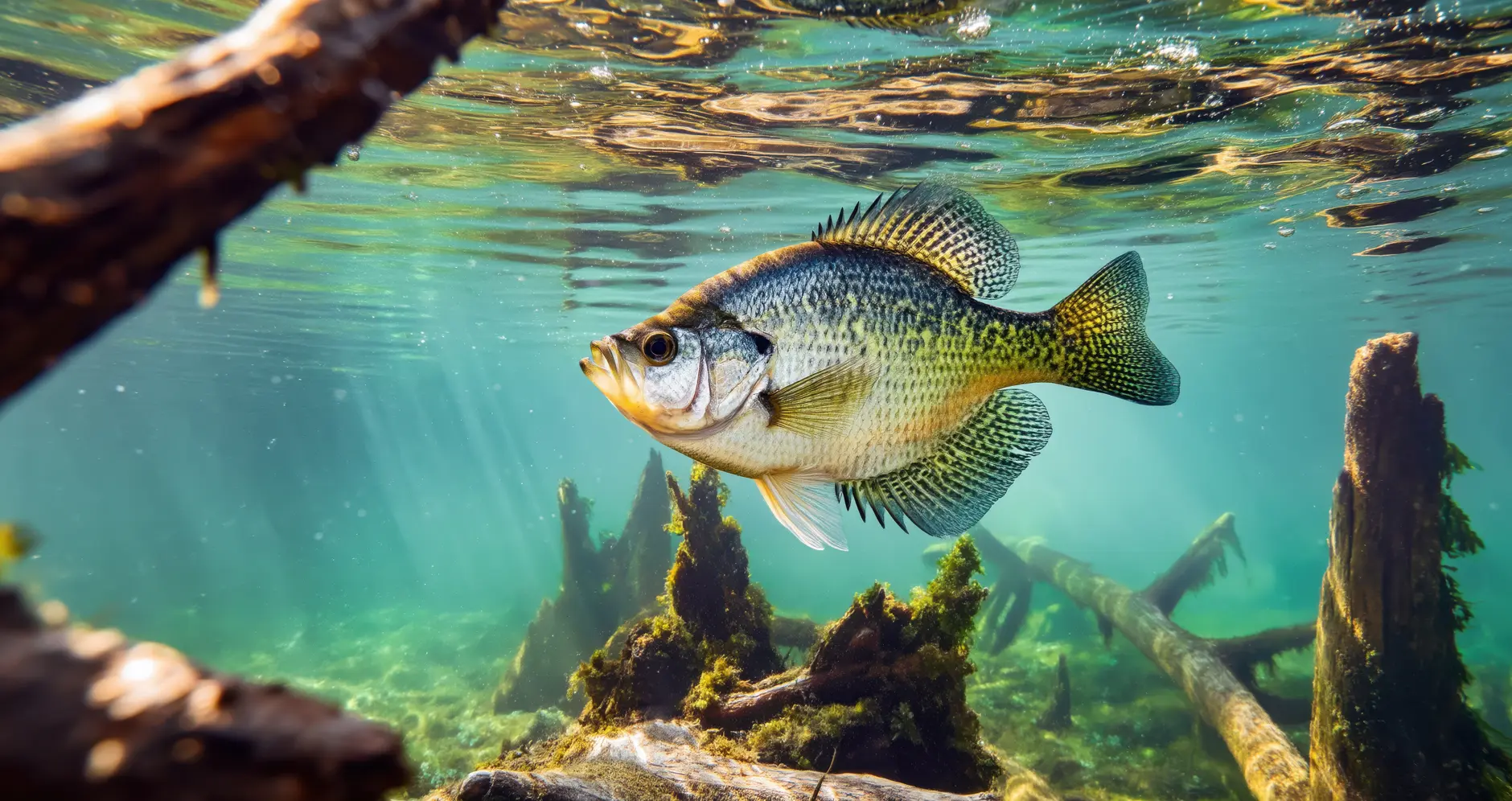
Known as black crappie, speckled perch, or simply "specks," these popular freshwater fish offer fast action, require relatively simple tackle, and make excellent table fare.
Crappie can be caught year-round, but cooler months bring some of Florida's most popular opportunities as fish move toward spawning areas. For Southwest Florida anglers accustomed to saltwater, it's also a chance to trade heavy tackle and Gulf runs for light gear, small jigs or minnows, and a completely different day on the water.
This guide covers when and where to find Florida specks, along with the tackle, bait, techniques, regulations, and destinations that can help you catch them.
Florida anglers know black crappie by several names, including speckled perch or simply "specks." Their deep bodies and irregular dark markings help explain the nickname.
Specks are schooling fish that often suspend in deeper open water before moving toward vegetation and shallower areas, particularly around the spawn. Understanding that seasonal movement—and the depth where a school is holding—is one of the keys to consistently finding them.
Quick Speck Facts
The biggest lesson may be the simplest: when you catch one speck, don't be too quick to leave. Others may be holding nearby at the same depth.
Speck fishing is refreshingly approachable, but simple fishing doesn't mean there aren't rules to follow.
Florida's statewide freshwater regulations establish the starting point, while individual lakes and Fish Management Areas may have additional restrictions. Regulations can also change, so anglers should always verify the current rules for the exact water they're fishing.
Visit the Florida Fish and Wildlife Conservation (FWC) for the most up-to-date information.
Before You Fish, Check:
In most cases, yes. Florida requires residents and visitors who are fishing for freshwater species to have an appropriate freshwater fishing license unless they qualify for an exemption. That requirement applies even when you're practicing catch-and-release fishing. If you're attempting to take fish, a license is generally required.
There are exemptions, including for children under 16 and Florida residents age 65 or older with appropriate proof of age and residency. Other exemptions apply in specific circumstances, so anglers shouldn't assume they qualify without checking.
FWC also designates license-free freshwater fishing days each year. All other fishing regulations remain in effect during those days.
Florida's statewide black crappie limit is 25 fish per angler per day, with no statewide minimum length requirement.
But here's the part worth remembering: Statewide doesn't mean everywhere.
Certain Florida waters have special regulations designed for their individual fisheries. Lake Okeechobee, for example, requires black crappie under 10 inches in total length to be released while maintaining the 25-fish daily bag limit. Lake Talquin also requires crappie under 10 inches to be released.
That's why checking the regulations for the lake you're actually fishing should become part of the trip-planning routine.
Florida doesn't have a closed statewide crappie season, so anglers can pursue specks year-round. However, cooler months draw the most attention as changing water temperatures move fish toward shallower spawning areas.
Rather than thinking of crappie season as a date on the calendar, think of it as a movement pattern: the fish move, and your fishing needs to move with them.
During warmer months, crappie often hold in deeper or open water, where drifting, trolling, and electronics can help locate schools. Summer anglers can also find success at night, when lights attract insects and baitfish.
As temperatures cool, specks begin moving toward shallower water and vegetation in preparation for spawning. This transition makes winter and early spring some of Florida's most popular months for crappie fishing.
FWC reports that black crappie typically nest from February through April, with spawning activity occurring around water temperatures of 62 to 65 degrees Fahrenheit.
As those conditions approach, look for fish moving toward shallower vegetation and staging areas between deeper water and spawning habitat. Temperature is a useful clue rather than an exact trigger, since weather, depth, location, and other conditions also influence fish behavior.
A Florida cold front can quickly change a productive pattern. Specks may pull away from shallow areas, move toward nearby deeper water or structure, and become less aggressive.
Before abandoning a productive location, adjust your depth and presentation. Slow down the jig, try a live minnow, or use electronics to locate a school that may have shifted. Sometimes the difference between "they aren't biting" and a cooler full of crappie is only a few feet of water.
Ingman Marine's Southwest Florida locations put boaters close to some extraordinary saltwater fisheries, but anglers looking for specks need to point the truck and trailer inland.
Florida's most productive crappie fisheries tend to be larger, nutrient-rich freshwater lakes where schools have access to open water, vegetation, structure, and suitable spawning habitat. That means coastal anglers around Sarasota, Bradenton, Port Charlotte, and Placida may need to drive a little farther than they would for their usual day on the water.
Fortunately, there are options ranging from nearby freshwater lakes to destination fisheries worthy of an early alarm and a full-day trip.
For anglers around Sarasota and Bradenton, Lake Manatee provides one of the closest verified opportunities to target black crappie.
Located east of Bradenton, this 1,180-acre reservoir supports several freshwater species, including black crappie. Specks can be found around aquatic vegetation and wood cover, while suspended fish may hold around deeper structure and underwater humps. Live minnows beneath a float can be an effective approach when fish are relating to cover. When specks move into more open water, trolling or spider rigging can help anglers cover more water until they locate a school.
There is one important boating consideration at Lake Manatee: boats are restricted to motors of less than 20 horsepower. Anglers with larger boats may need to choose another destination or use an appropriately powered smaller vessel.
Port Charlotte and Placida anglers are surrounded by outstanding saltwater fishing, but dedicated public crappie destinations become less obvious close to the coast. Rather than sending anglers to a nearby river simply because it's freshwater, this is one of those situations where driving farther inland can produce a much better speck-fishing experience.
FWC's Southwest Region fishing resources include several established crappie fisheries farther inland, and one stands well above the others for anglers willing to make the trip.
If catching specks is the actual goal rather than simply adding crappie to a mixed freshwater fishing day, Lake Istokpoga deserves serious consideration. Located in Highlands County, east of our Ingman locations, Lake Istokpoga is well known for its black crappie fishery and attracts anglers from well beyond Florida during the cooler months.
Open-water anglers commonly drift live minnows or grass shrimp or troll small jigs while searching for schools. As fish move toward spawning areas, vegetation becomes increasingly important. Bulrush, cattails, pads, and grasses near deeper water can all provide productive areas to investigate.
FWC specifically identifies Henderson's Cove and the north end of the lake as productive areas around the outside edges of vegetation near deeper water. Open-water areas around Big Island and the western shore of Long Island can also hold schooling specks.
But perhaps the best Lake Istokpoga advice is the same lesson that applies almost everywhere crappie swim: Keep moving until you find the fish, once you locate a concentrated school, slow down and determine the depth they're using before searching for another spot.
Southwest Florida anglers aren't limited to local waters. FWC identifies several fisheries throughout the state known for quality crappie fishing, giving speck anglers plenty of reasons to turn a fishing trip into a weekend getaway.
Florida's largest lake is famous for bass, but it also supports an excellent black crappie fishery. Specks can be found among its open water, canals, vegetation, and marsh habitat, with fish locations changing seasonally.
Because Okeechobee is so large, electronics can be particularly helpful for locating suspended schools rather than searching vast stretches of water blindly.
The Kissimmee Chain offers multiple productive Central Florida fisheries, including well-known Lake Toho and Lake Kissimmee.
Open water and extensive aquatic vegetation provide diverse crappie habitat, while multiple lakes give anglers options as seasonal conditions and fish locations change. FWC recognizes the Kissimmee Chain among Florida's notable crappie destinations.
Northwest of Orlando, the Harris Chain includes eight primary lakes covering roughly 75,000 acres.
Black crappie are a popular sportfish throughout the system, and numerous public ramps make it accessible for anglers bringing their own boat. With so much water to explore, it's particularly well-suited to a multi-day Central Florida fishing trip.
Rodman Reservoir offers structure-focused crappie anglers something different. Flooded timber, submerged trees and stumps, vegetation, river channels, and the Cross Florida Barge Canal create abundant fish-holding habitat.
Live minnows and small jigs can produce around the river channel and canal. However, the same timber that creates productive habitat can also present navigation hazards, making careful boat operation important.
Located west of Tallahassee, Lake Talquin is nationally known for black crappie. The 8,800-acre reservoir averages about 15 feet deep and contains abundant submerged timber and woody structure.
It also produced Florida's current state-record black crappie at 3.83 pounds, giving serious speck anglers one more reason to make the long trip north.
There's no reason every crappie trip needs to become a cross-state expedition. For Southwest Florida anglers, think about these fisheries in tiers:
Exact drive time can vary considerably depending on which area you're leaving from, traffic, ramp choice, and which side of a large lake you're accessing. Check the specific launch location before heading out rather than relying solely on the lake name when planning travel time.

Crappie fishing doesn't require an expensive collection of specialized equipment. Because specks have relatively soft mouths and feed on small forage, sensitivity and presentation matter more than power.
A light spinning setup, light line, small jigs, and live minnows or grass shrimp can handle many Florida crappie situations.
A light or ultralight spinning rod paired with a small reel is an excellent starting point. Longer rods work well for fishing floats, dipping jigs around vegetation, or reaching cover without moving the boat directly over the fish. Shorter rods can be easier to manage when casting around docks and tight spaces.
Whichever you choose, a sensitive rod helps detect subtle bites while protecting a crappie's delicate mouth. And there's a bonus: even an average speck is more fun on light tackle.
Light line allows small baits to move naturally and makes lightweight jigs easier to cast. Monofilament is a simple, forgiving option, while light braid offers greater sensitivity and less stretch. A fluorocarbon or monofilament leader can be added when conditions call for it.
Keep terminal tackle simple, too. Small hooks, split shot, floats, and lightweight jig heads cover most common presentations. FWC recommends 1/16- to 1/8-ounce jigs as a useful starting point. Live minnows and grass shrimp provide natural movement, while small feathered or soft-plastic jigs make it easy to experiment with color, depth, and presentation or cover water while trolling.
You don't need dozens of options. A few small jig heads and soft plastics, basic float rigs, and live bait when desired will cover plenty of speck fishing situations.
Electronics aren't essential when crappie are shallow around visible cover, but they become especially valuable when fish suspend in deeper water.
Sonar can locate schools, submerged brush, drop-offs, channels, and underwater humps, while mapping helps identify depth changes and return to productive areas. Once you mark fish, pay attention to where they are in the water column. If a school is holding 10 feet down over 16 feet of water, fishing the bottom may put your bait beneath them.
Finding the school is only half the job. Putting your bait at the depth of the school gets the bites.
Crappie fishing can be as simple or technical as you want to make it.
A beginner can catch specks with a minnow and float, while experienced anglers may use multiple rods, electronics, trolling techniques, and carefully controlled presentations to stay with roaming schools.
The best technique depends on where the fish are holding, how active they are, and how much water you need to cover to find them.
If you're new to crappie fishing, this is one of the easiest places to start.
Rig a small live minnow beneath a float, add enough weight to keep the bait at the desired depth, and present it near vegetation, submerged wood, docks, or other areas where specks may be holding. The important part isn't simply putting a minnow in the water. It's controlling depth. If you aren't getting bites, adjust the distance between the float and bait before assuming there aren't fish nearby. A change of only a few feet—or sometimes less—can put your minnow directly into the feeding zone.
Once the float disappears or begins moving unnaturally, avoid an exaggerated hookset. Crappie have delicate mouths, and steady pressure is generally more effective than trying to drive the hook home.
Small jigs give anglers several ways to target crappie. They can be cast toward cover and retrieved, worked vertically around submerged structure, presented beneath a float, or slowly moved through vegetation and likely holding areas.
Start slowly. Cold or less-active crappie may prefer a subtle presentation, while more aggressive fish can respond to a slightly quicker retrieve. Small movements are often enough to give a soft-plastic or feathered jig the action it needs.
Color matters, but depth and presentation usually deserve attention first. The perfect jig won't catch many crappie if it's swimming several feet above or below the school.
When you don't know exactly where crappie are holding, covering water can help you find them.
Slow trolling allows anglers to pull small jigs or live-bait presentations through likely areas while searching for active fish. Once several bites come from the same location or depth, you can tighten the search and spend more time working that productive zone.
Spider rigging takes that idea further by positioning multiple long rods around the boat, creating a spread of baits that can cover different depths or locations at the same time. It's an efficient way to search for schooling crappie, but it requires organization. Multiple rods, lines, hooks, and potentially several hooked fish can become chaotic quickly. Start with fewer rods until you're comfortable managing the spread.
And always check the current regulations for the water you're fishing before using multi-rod techniques.
Crappie may spend time suspended in open water, but structure and cover frequently provide clues to where they'll be found.
Depending on the lake and season, look around:
Don't simply cast at visible cover and move on after two attempts. Fish different sides of it. Change your depth. Slow the presentation. Look for nearby submerged structure with electronics.
And when one area produces several fish, ask yourself why. Was it the depth? Vegetation? Shade? Current? A nearby drop-off? Learning what the fish are relating to can help you find the next school much faster.
Perhaps the most important rule is the simplest: Don't leave fish to find fish.
Ask a group of crappie anglers about the best bait, and you may get as many answers as there are people in the boat. Fortunately, both live minnows and small artificial jigs consistently catch Florida specks. The better choice often comes down to conditions and how actively the fish are feeding.
Live minnows provide a natural presentation and work especially well beneath floats, around cover, or when fish are holding at a known depth.
Artificial jigs make it easier to cover water, change depths and colors, troll, and cast repeatedly without rebaiting. There's no need to choose one exclusively—carrying both gives you options as the bite changes.
Water clarity provides a useful starting point. In clear water, try natural or subtle colors. In stained or darker water, brighter, higher-contrast combinations can help fish locate the bait. Rather than carrying every color available, bring a small selection and experiment with color, depth, and presentation until the fish respond. If one combination starts producing consistently, you've got your answer for that day.
Specks usually give you clues. The trick is paying attention long enough to notice them.

You don't need a highly specialized boat to catch crappie. You do need a boat that works well for how crappie are caught. Speck fishing often involves long periods of slow movement, repeated casting, trolling, or holding near productive structure. That makes stability, deck space, quiet boat control, storage, and electronics more valuable than sheer horsepower.
For anglers choosing or outfitting a boat for freshwater fishing, useful features can include:
That last point deserves extra attention.
The best boat isn't simply the one with the most fishing features. It has to fit the water.
Choosing the boat is only part of creating a fishing setup that works. The right fishing setup goes beyond choosing the boat.
Our staff at our 4 Ingman Marine locations can help anglers select a boat suited to their preferred waterways, along with electronics, trolling motors, and other equipment that supports the way they fish.
That expertise extends to Ingman's Pro Staff, whose firsthand Florida fishing experience can provide additional insight into equipment, techniques, and local conditions. Parts and service teams also help keep boats ready with maintenance, repairs, repowering, and equipment installations.
Because when specks start biting, you'd rather be figuring out what depth they're holding than why you don't have a boat in the driveway.
There's another reason Florida anglers look forward to speck fishing: crappie have earned an excellent reputation on the dinner table.
Their mild, flaky white meat works with simple preparations, so there's no need to turn your catch into an elaborate culinary project after a long day on the water.
Keep harvested crappie cold and properly iced until you're ready to clean them.
Filleting is a popular option because it produces boneless portions that are easy to prepare. After removing the fillets, trim away the rib bones and skin, rinse only as needed, and keep the fish refrigerated until cooking.
How many fish you keep is a personal decision—as long as it remains within current regulations. There's nothing wrong with releasing part or all of your catch, particularly when you've already brought home enough for a meal.
Fresh crappie doesn't need much help, it is delicious on its own.
One classic approach is to season the fillets, lightly coat them with seasoned flour, cornmeal, or a combination of the two, and fry them until the exterior is crisp and the fish flakes easily. Prefer something lighter? Crappie can also be baked or pan-seared with butter or oil, lemon, herbs, and simple seasoning.
However you prepare them, smaller fillets cook quickly. Keep an eye on them and avoid overcooking the fish you've spent all day trying to catch.
Florida speck fishing doesn't have to be complicated. Crappie can be caught throughout the year, but cooler months and the approach of the spawn create some of Florida's most anticipated opportunities. Learn how seasonal changes affect where the fish hold, use light tackle, experiment with depth, and don't be too quick to leave once you've located a productive school.
Southwest Florida anglers may have to turn inland to find the state's better-known crappie waters, but that's part of what makes speck fishing such an enjoyable change of pace. A morning that might normally begin by heading toward the Gulf can instead lead to Lake Manatee, Lake Istokpoga, or even a road trip to one of Florida's legendary crappie destinations.
Start simple. Bring a light rod, a few jigs or live minnows, and enough patience to figure out where the fish are that day.
Then, when that first float disappears beneath the surface, you'll understand why generations of Florida anglers keep coming back for specks.
