
There isn't a single feature that answers the question - what makes a Grady-White different? The SeaV² hull is certainly one place to start, but the Grady-White difference goes well beyond the shape of the hull beneath the water. It comes from the way the company approaches construction, seating, storage, fishing features, protection from the elements, technology and the countless details that determine how a boat works once you leave the dock.
That approach is evident across the lineup, from compact center consoles to offshore fishing machines, dual consoles, Coastal Explorers, walkaround cabins and Express models. The boats are built for different kinds of boating, but they share a common design philosophy: features should have a purpose, solve a problem or make the experience better.
Some of those features are Grady-White innovations or patented designs. Others reflect the company's approach to integrating proven technology from partners such as Yamaha. Still others are options that allow owners to configure a boat around the way they actually use it.
So what should you look for when you step aboard a Grady-White?
Rather than simply walking through a list of specifications, let's take a closer look at the features, innovations and details behind the boats—from the hull beneath your feet to the small conveniences you may not fully appreciate until you've spent a day on the water.
Before getting into seating, storage, electronics or any of the other features that make a boat more comfortable and capable, it makes sense to start with what everything else is built around: the hull. For Grady-White, that means SeaV²®—the company's exclusive hull design and one of the defining elements of its boats.
SeaV² - short for “Continuously Variable Vee” - is Grady-White's exclusive hull design, developed in collaboration with Ray Hunt Design. Rather than maintaining one fixed deadrise from bow to stern, the hull's Vee changes progressively along its length. Grady-White describes the SeaV² design as deepening from approximately 20 degrees at the transom to approximately 30 degrees amidships.
In simple terms, the hull is designed to behave differently where it needs to.
The result is a hull shape intended to provide a comfortable, controlled ride without requiring the boat to sacrifice the stability and efficiency that matter during everyday use.
The changing geometry allows different sections of the hull to do different jobs. The deeper V forward helps the bow meet and move through waves, while the more moderate deadrise aft contributes to stability and efficiency. The hull's strakes and chines also work together to provide lift and stability, while bow flare and high freeboard help keep spray and water where they belong.
The result isn't simply a number on a specification sheet. It's a hull designed around how a boat actually moves through changing conditions—and how that movement feels to the people aboard.
You can see the SeaV² philosophy across the lineup, from smaller models such as the Fisherman 180 to offshore-focused boats such as the Canyon 456 and versatile Coastal Explorers such as the 321 CE. The boats vary dramatically in size, layout and mission, but the hull philosophy remains a common foundation.
And that's an important distinction. A hull isn't a feature you select from a menu or appreciate only when you're reading specifications. It's something you experience every time the boat moves.
SeaV² is not one feature among many on a Grady-White. It is the foundation upon which many of the boat's other qualities are built.
A boat can have an impressive hull design, but the structure supporting it matters just as much. Some of the most important Grady-White features are the ones you may never notice while you're underway.
Across the lineup, Grady-White builds its boats with a 100% hand-laid SeaV² hull and deck, along with a water-impervious composite stringer system and transom. The construction is designed to provide strength without relying on wood in those structural components.
A boat can have an impressive hull design, but the structure supporting it matters just as much. Some of the most important Grady-White features are the ones you may never notice while you're underway.
The details continue throughout the boat. Grady-White uses 316-grade stainless-steel hardware that is through-bolted to the deck, stainless-steel through-hulls, self-bailing cockpits and automatic bilge pumps. Nonskid fiberglass liners, grab rails and high-density PVC rubrails with stainless-steel inserts add further layers of function and durability.
None of this makes a boat maintenance-free—nothing in a saltwater environment does. But it demonstrates the type of decisions that can make a difference long after the new-boat shine has worn off.
Water is, naturally, the reason we're all here. It is also one of a boat's constant adversaries.
A self-bailing cockpit helps move water overboard rather than leaving it standing on deck. Automatic bilge pumps provide another layer of protection when water gets where it shouldn't. Through-bolted hardware provides a more substantial attachment than fastening components into the deck surface, while composite structural components are designed to resist water-related problems associated with traditional wood construction.
These aren't glamorous features. They're the kind you hope you never have to think about.
This is where the connection between construction and the Grady-White experience becomes clearer. Hull design, structural materials, hardware, drainage and systems create the foundation on which everything else depends.
And sometimes the most meaningful features on a boat are the ones you never notice—because they're doing exactly what they were designed to do.
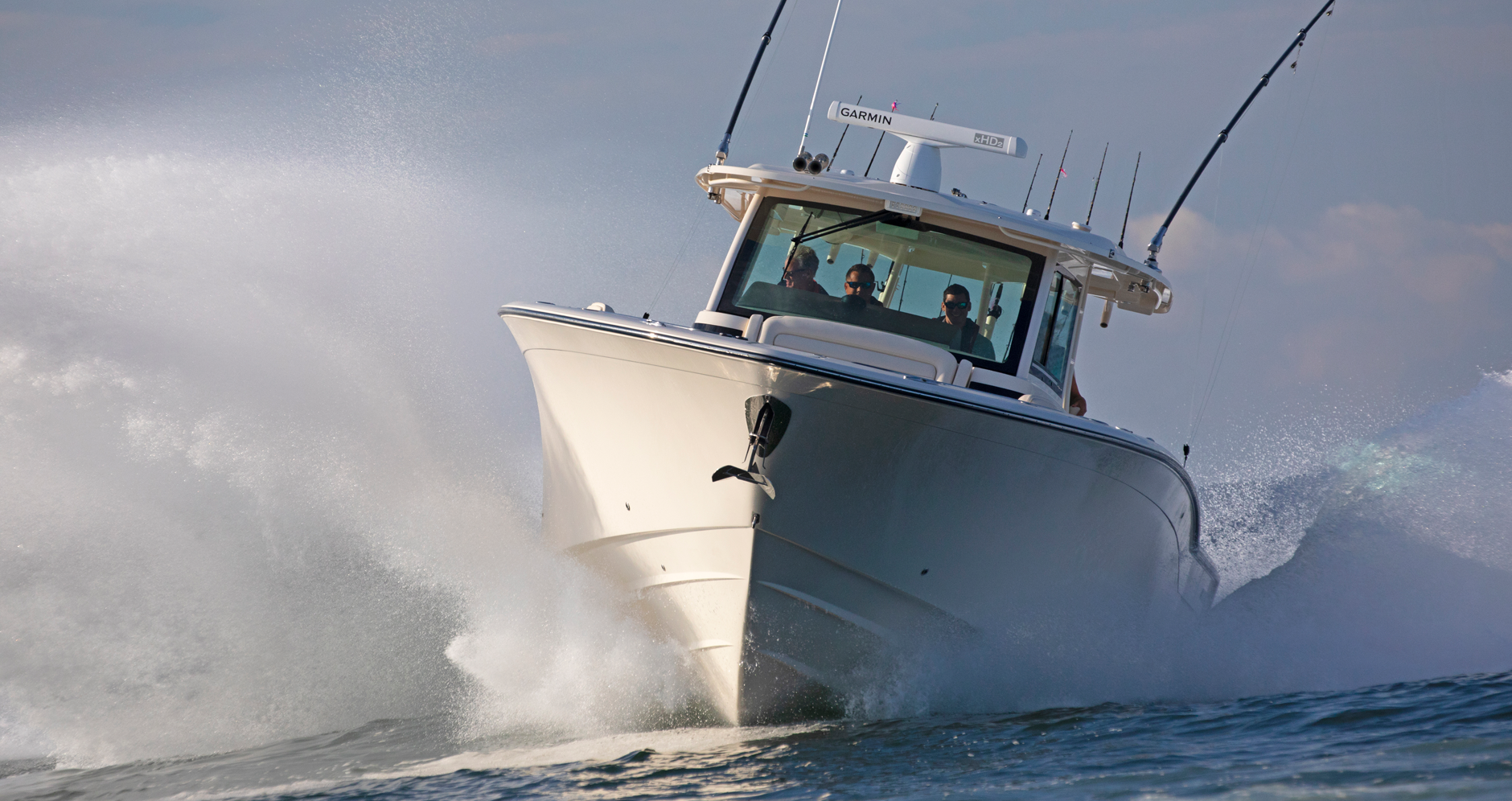
Innovation on a boat doesn't always look like a futuristic piece of electronics.A feature becomes more meaningful when you understand the problem it was designed to solve.
Those kinds of solutions are particularly interesting in Grady-White's lineup because the company doesn't just talk about innovation in general terms. Grady-White maintains an Innovations & Patents program that identifies its pioneering designs, exclusive features and patented breakthroughs.
The common thread isn't simply that these features are patented. It's that they make a boat more adaptable to the people using it. For instance, anyone who has spent a day on a boat knows that seating can be both a blessing and an obstacle.
The company's documented patents include fold-away forward-facing seatbacks, a three-position sliding and tilting companion seat, an electronically controlled convertible lounge seat, a fold-down cockpit step assembly and integrated sliding-rack rod storage. Grady-White also identifies a patented aft fold-down bench seat assembly as part of its design history
The principle is straightforward: one piece of furniture can serve more than one purpose.
A seat can provide comfortable support when passengers want to relax, then fold or reposition when the cockpit needs to become a working space. Rod storage can keep equipment organized without consuming the deck area needed for fishing. A well-placed boarding step can make getting in and out of the boat easier without becoming a permanent obstacle in the cockpit.
That philosophy is also evident in Grady-White's Sport Deck design. Introduced on the 281 Coastal Explorer in 2023, the portside Sport Deck is an electromechanically folding platform with a stowable boarding ladder. Grady-White describes it as a pioneering feature for a boat of that size, designed to make the platform useful for landing fish as well as swimming, diving and boarding. On the 321 CE, the concept expands to dual Sport Decks.
These aren't features designed simply to fill a specification sheet. They're examples of a broader approach: a well-designed boat should adapt to the people using it.
If the hull determines how a boat moves through the water, the cockpit determines how much you can actually do once you get there.
It's where rods come out of the holders, fish come aboard, coolers get opened, passengers gather, lines are handled and the day's activities constantly change. A well-designed cockpit therefore has to do something that sounds simple but is surprisingly difficult: serve several purposes without becoming cluttered or compromised.
For a fishing boat, that means the cockpit has to function as a working space—not simply a place where fishing features happen to be installed. Rod storage, fish boxes, livewells, tackle storage, rigging space and seating all have to work together without making the deck feel crowded.
The 321 CE is a good example of that approach. Its cockpit includes two 108-quart forward fish boxes, two 18-gallon insulated raw-water livewells, strategically placed rod holders and four horizontal rod racks. The aft bench can be configured around the working cockpit, while the dual Sport Decks can extend the usable space beyond the traditional cockpit footprint.
On a more offshore-focused platform, the Canyon 336 takes the same idea in a different direction. It provides two 204-quart port and starboard fish boxes, two 291-quart aft fish boxes, a 44-gallon livewell and a dedicated rigging station with freshwater shower, cooler, cutting board, rod holders and tackle storage.
The numbers are impressive, but the more important point is how the features relate to one another. Fish boxes need to be accessible from the working deck. Rod storage should keep equipment organized without consuming valuable cockpit space. Seating should provide comfort without permanently occupying the areas fishermen need when the action starts.
That's why fold-away seating, integrated storage and features such as the Sport Deck matter. They allow the cockpit to change as the activity changes—whether you're fighting a fish, boarding a swimmer or simply opening up the deck for a group of passengers.
The 321 CE, for example, combines horizontal rod racks with vertical rod storage inside the console, while the Canyon 336 adds lockable tackle storage and bulk storage around its fishing and helm areas.
The goal isn't to make storage disappear. It's to make the boat feel less cluttered because the things you bring aboard have a logical place to go.
A fishing cockpit also has to accommodate everything that happens between casts. Fold-away seating, integrated storage and features such as the Sport Deck allow the space to change with the activity—whether you're fighting a fish, boarding a swimmer or opening up the deck for a group of passengers.
This is where the earlier discussion of Grady-White's patented seating and Sport Deck innovations starts to make sense.
The objective isn't simply to put more features on the boat. It's to make the same square footage useful in more than one way.
The fishing cockpit also increasingly becomes an outdoor living space.
A good example is the Canyon 336's deluxe lean bar. It combines three Command Elite helm chairs with flip-up bolsters, a 44-gallon livewell, rod holders, tackle storage, a freshwater shower and a rigging station.
That's a lot happening in one area, but the components are organized around specific jobs.
The angler can work at the rigging station. A crew member can access the livewell. The helm crew has dedicated seating. Gear can be stored in lockable compartments. And the freshwater shower provides a way to rinse off equipment or people.
In 321 CE, the same philosophy appears in a different form: the aft-facing deluxe mezzanine provides seating and a fold-down Corian countertop while incorporating tackle and bulk storage, allowing the area behind the helm to serve both the fishing crew and passengers.
That's the difference between adding features and designing a cockpit.
If you want to understand the larger Grady-White philosophy, spend some time looking at the cockpit.
Fishing features are there because the boats are expected to fish.
Comfort features are there because fishing isn't the only reason people leave the dock.
Storage is integrated because equipment needs somewhere to live.
Convertible seating is there because the boat's purpose changes throughout the day.
And details such as washdowns, boarding ladders, tackle storage and freshwater systems are there because boating involves a lot more than simply getting from one place to another.
The result is a cockpit designed to change with the day rather than dictate what the day has to be.
Fish in the morning. Cruise in the afternoon. Swim at the sandbar. Bring everyone home for sunset.
The best cockpit isn't necessarily the one with the longest feature list. It's the one that continues to make sense as the people, equipment and activities aboard the boat change.
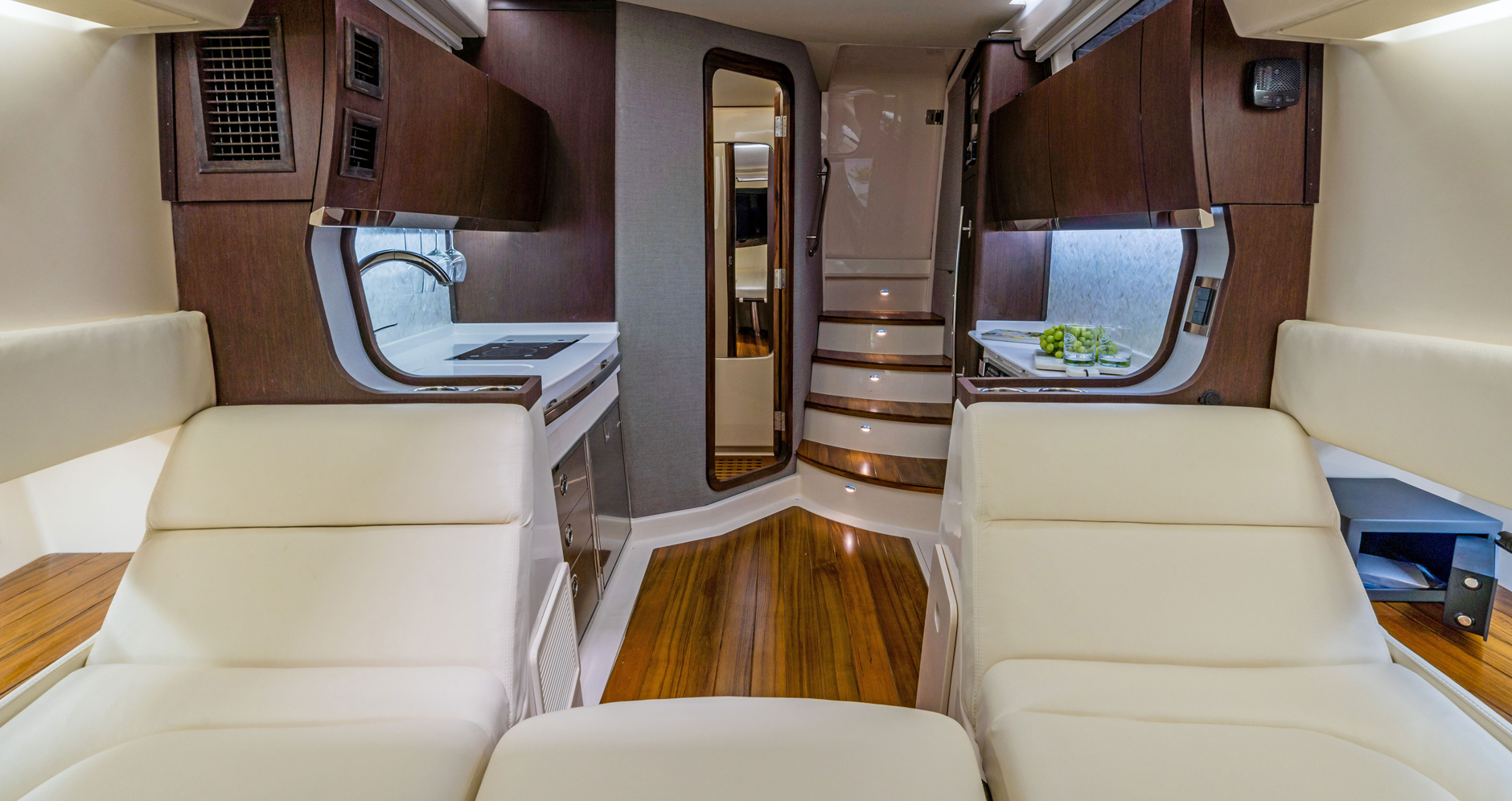
"Cabin" can mean very different things on a boat, and Grady-White's lineup is a good illustration of why. A protected space for a portable head and a place to escape a rain shower serves one purpose; a dedicated overnight cabin with a galley, enclosed head and air conditioning serves another.
Rather than treating the cabin as a single formula, Grady-White offers several configurations designed around different kinds of boating. Understanding those differences can be more useful than simply counting berths or measuring interior space.
The Walkaround Cabin combines a protected forward cabin with side decks that allow the crew to move around the cabin and access the bow. In Grady-White's current lineup, the Adventure 218 and Marlin 300 represent this approach.
The Adventure 218 demonstrates how much functionality can be built into a relatively compact package. Its forward cabin includes a V-berth, storage and a portable head, while the walkaround layout preserves access around the cabin and keeps the boat connected to the bow and forward fishing areas. (gradywhite.com)
The Marlin 300 takes the concept substantially farther, with a larger cabin and accommodations intended for more extended use while retaining the walkaround configuration.
The appeal is flexibility: you get a protected cabin without allowing the cabin to consume the entire forward half of the boat.
Grady-White's Express models answer a different question: what if protected living space is a significant part of how you intend to use the boat?
The current Express 340 and Express 370 move well beyond the idea of a simple cuddy cabin. The Express 370, for example, incorporates a forward V-berth, aft double berth, galley, refrigerator, microwave, stove, enclosed head, freshwater system and air conditioning. Its AV²® hardtop also extends the protected environment beyond the cabin itself. (gradywhite.com)
That makes the Express configuration particularly relevant to boaters who want to spend longer days aboard—or potentially nights aboard—without giving up the fishing capability and offshore orientation expected of a Grady-White.
The distinction is important. A Walkaround cabin gives you protected space while preserving a highly open deck plan. An Express cabin makes comfort, shelter and extended time aboard a much larger part of the boat's mission.
Then there's another Grady-White approach: keeping the center-console layout while using the console and forward areas to create surprisingly substantial protected space.
The Canyon 336 is a good example. Beneath its center-console configuration is a stand-up cabin with a head and shower, providing considerably more utility than the word "console" might suggest. The Canyon 386 takes the concept further with a larger cabin and weekend-oriented accommodations. (gradywhite.com)
This is where Grady-White's model diversity becomes particularly useful to a shopper. You don't necessarily have to choose between a fishing-first center console and a boat with meaningful protected accommodations. Depending on the model, the two can coexist.
At the smaller end of the lineup, an enclosed head may simply mean privacy and convenience during a day on the water.
The Freedom series demonstrates how that idea scales. Smaller models can incorporate a lockable console head with a portable marine toilet, while larger Freedoms move toward enclosed heads with marine toilets, holding tanks and additional amenities. The Freedom 255, for example, offers an enclosed head with an electric-flush marine toilet, holding tank, macerator and pump-out. (gradywhite.com)
The feature may occupy only a small percentage of the boat's total footprint, but its value can be enormous when you're carrying children, guests or anyone who would rather not make an emergency run back to the dock.
Again, it's less about how impressive a feature sounds on a specification sheet and more about what problem it solves once you're actually on the water.
These different cabin configurations reveal something important about the lineup.
A Walkaround emphasizes access, protection and versatility.
An Express gives protected living space a much larger role in the boat.
A center-console cabin can preserve an open fishing layout while adding meaningful overnight or weather-protected capability.
A console head may simply provide privacy and convenience during a day trip.
None is inherently "better." They're different answers to different boating priorities.
And that's a recurring theme throughout Grady-White's lineup: the goal isn't to make every boat do everything. It's to give each boat the right combination of capabilities for the way it's intended to be used.
On a boat, the structure overhead has an important job. It keeps the sun off the crew, provides shelter when the weather changes and gives the helm a place to mount electronics, lighting and other equipment. On a fishing boat, it can also become part of the fishing system itself.
Grady-White's hardtop designs reflect that progression. Across the lineup, the company offers everything from practical fiberglass T-tops to increasingly integrated hardtop systems that combine weather protection, visibility, lighting, storage, fishing equipment and shade.
On smaller Grady-White models, the T-top can be relatively straightforward: a fiberglass top supported by a painted aluminum frame, with features such as integrated windshield protection, storage, lighting, rod holders and a radar flat depending on the model.
The current 231 CE is a good example. Its fiberglass T-top incorporates a painted aluminum frame, integrated windshield, storage net, LED spreader lights, recessed lighting, rod holders and a radar flat. (gradywhite.com)
The important point is that these components aren't independent of one another. The top creates a central location for equipment the boater needs while also providing protection for the people below it.
As the boats become larger, that integration becomes more elaborate.
On selected larger Grady-White models, the company's AV²® hardtop system takes the concept beyond a traditional T-top.
Depending on the model, AV² can incorporate an integrated windshield, fiberglass enclosure, sliding sunroof, screen and shade, LED lighting, storage, rod holders, outrigger plates and additional weather protection.
The Express 370 provides a particularly good example. Its AV² hardtop incorporates an electrically operated sliding sunroof with a screen and shade, while the larger enclosure helps create a more protected helm and cockpit environment. (gradywhite.com)
At the upper end of the lineup, the Canyon 456 takes that concept even further, integrating the hardtop with a substantial offshore cockpit and helm environment.
That evolution illustrates an important design principle: as the boat's mission changes, the structure overhead can become part of the boat's usable living and working space rather than simply something that provides shade.
Weather protection is valuable, but so is visibility.
A hardtop enclosure has to provide shelter without making the helm feel closed in or restricting the operator's view. Grady-White's integrated windshield and enclosure designs are intended to create a protected helm while preserving sightlines around the boat.
Additional systems such as side curtains and removable or retractable shades allow the level of protection to change with the conditions.
That adaptability matters in coastal boating, where a calm morning, intense midday sun and afternoon rain shower can all happen during the same outing.
The hardtop also creates valuable real estate above the cockpit.
Depending on the model, Grady-White integrates features such as rod holders, outrigger plates, spreader lights, electronics mounting areas and storage into the overhead structure.
That means equipment doesn't necessarily have to consume valuable deck space.
It's another example of the philosophy we've seen throughout the lineup: use the available space more than once.
The same structure that protects passengers from the sun can support the electronics at the helm, hold fishing equipment, provide nighttime illumination and create a foundation for additional shade.
And as the boat grows, the system can grow with it.
A hardtop may not be the first feature someone thinks about when comparing boats, but its value becomes obvious during actual use.
Spend several hours in the Florida sun and shade becomes more than a convenience. Run through a sudden rain shower and windshield protection becomes important. Head offshore before sunrise and integrated lighting matters. Start fishing seriously and rod holders, outrigger plates and electronics mounting suddenly have a very practical purpose.
The hardtop is therefore another place where the Grady-White experience is created through accumulation.
One structure can protect you from the elements, support the equipment you depend on and make the boat more comfortable without taking valuable space away from the people and activities below it.
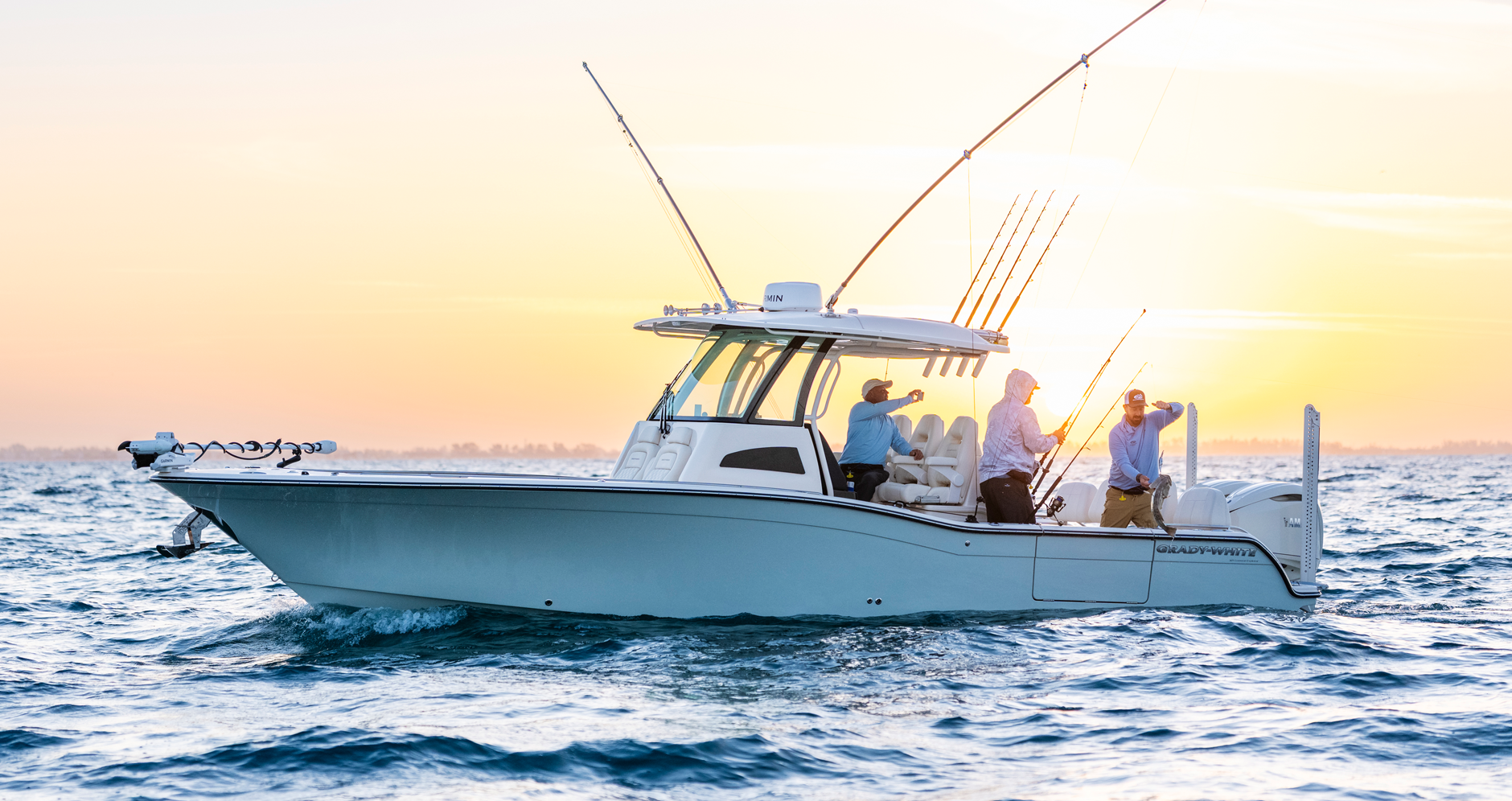
Not every feature that contributes to a good day on the water is something you'll notice immediately. Some work at the helm. Some operate quietly in the background. Others may seem almost insignificant until the day you need them.
That is where technology, safety systems and the smaller details of Grady-White's boats come together. The company combines its own design and construction practices with technologies developed through collaborations with established marine brands, then integrates those systems into boats according to the needs of each model.
The result is less about having the longest possible equipment list and more about making the boat easier to operate, monitor and live with.
Modern outboard boats can be remarkably sophisticated, and Grady-White takes advantage of that technology on models throughout its lineup.
One example is Yamaha Helm Master® EX, Yamaha's integrated boat-control system. Depending on the model and configuration, Helm Master EX can provide features such as joystick maneuverability, digital electric steering, autopilot and other control functions designed to make handling a multi-engine boat more intuitive.
Grady-White offers Helm Master EX on a number of current models, with availability and standard equipment varying according to the boat. On larger models, the system becomes part of a broader helm designed around the demands of operating a substantially larger offshore boat.
The important distinction is that Helm Master EX isn't a Grady-White invention. It's a Yamaha technology that Grady-White incorporates into appropriate boats as part of its broader approach to integrated systems.
That distinction matters because it demonstrates another side of the Grady-White experience: the company doesn't have to invent every component to make thoughtful choices about what belongs on the boat.
The same principle applies to Yamaha Siren Marine Connected Boat® Monitoring System.
Siren Marine provides connected monitoring capabilities that can allow owners to keep tabs on selected boat systems remotely through compatible technology. Depending on the configuration, that can include information such as battery status, vessel location and other monitored conditions.
Grady-White incorporates the system into numerous current models, although whether it is standard or optional varies by boat.
This is particularly useful because the relationship between an owner and a boat doesn't end when the owner walks away from the dock. Connected monitoring provides another way to stay informed about the boat between outings.
Like Helm Master EX, Siren Marine isn't a Grady-White invention. The value is in how the technology is integrated into the ownership experience.
Technology gets plenty of attention, but some of the most important safety features on a boat are much less glamorous.
As we've already seen, current Grady-White models repeatedly incorporate features such as water-impervious composite stringer and transom systems, automatic bilge pumps, self-bailing cockpits, stainless-steel through-hulls, nonskid fiberglass liners and substantial grab rails. Specific equipment varies by model.
These systems work together to address some of the fundamental realities of boating: water gets aboard, people move around, equipment is exposed to the marine environment and conditions can change.
Safety isn't therefore confined to an emergency equipment checklist. It is also reflected in how the boat is constructed and how the systems are arranged.
That is one reason the details we discussed earlier—hand-laid construction, through-bolted hardware and water-management systems—belong in the larger safety conversation. They're individual pieces of a larger system.
Then there are the features that might barely register during a showroom walk-through.
Take Phender Pro™, for example. Current Grady-White models such as the 321 CE incorporate quick-release fender cleats that make it easier to position and remove fenders when docking. (gradywhite.com)
It isn't going to make the boat's headline specifications.
But ask someone who's maneuvering a boat toward a dock with a crosswind and a passenger trying to get a fender into position, and suddenly a small convenience can become a very welcome one.
The same philosophy appears in features such as dedicated freshwater and raw-water washdowns, engine-flush systems, hydraulic trim tabs with indicators, integrated boarding ladders, wireless phone charging and carefully positioned storage. Availability varies by model, but the pattern is consistent: reduce friction in the ordinary moments of boat ownership.
Those details matter because boat ownership isn't made up entirely of memorable sunsets and perfect fishing days. There is launching, loading, docking, cleaning, stowing gear, charging devices, rinsing equipment and getting everyone safely back aboard.
Good design pays attention to those moments, too.
That may be the most useful way to look at the technology and smaller features aboard a Grady-White. Small conveniences reduce the number of little frustrations that can accumulate during a day on the water.
None of those things replaces good seamanship, regular maintenance or attention to changing conditions. They simply make the boat better equipped to support the people using it.
And that brings us back to the larger pattern we've seen throughout the Grady-White lineup.
The most meaningful features aren't always the ones that demand your attention. Some are the ones that quietly make everything else work better.
A Grady-White's identity is recognizable, but that doesn't mean every boat has to be configured the same way. Current models offer a range of options that allow owners to tailor a boat to the way they fish, cruise, entertain and spend time on the water.
That personalization can start with the hull itself. Grady-White currently offers its classic Grady White gelcoat along with Celestial Blue, Coastal Fog, Ocean Mist and Sage Gray on many models, with coordinated T-top or hardtop underside colors available on selected boats.
From there, the choices become more mission-specific. Depending on the model, buyers can add features such as bow tables, trolling-motor pre-rigs, outriggers, retractable cockpit shades, underwater lighting, bow thrusters, Seakeeper stabilization and other equipment. CE Certification Packages and international electrical conversion are also available on selected models for boats intended for markets beyond the standard U.S. configuration.
The important point is that personalization doesn't change the underlying philosophy. It simply allows an owner to take the Grady-White platform and configure it around the way they intend to use it.
After looking at the details, it's easier to understand why reducing the Grady-White difference to a single feature doesn't quite work.
It starts underneath you with the SeaV² hull.
It continues through the construction: hand-laid hulls and decks, composite structural components, through-bolted hardware and systems designed to manage water and protect the boat.
Then come the innovations that solve real boating problems—seating that changes configuration, storage designed around fishing equipment, adaptable cockpit space and features such as the Sport Deck that allow one area of the boat to serve multiple purposes.
The same philosophy appears in the cabins, cockpits and hardtops. Space is expected to do more than one job. Fishing capability is integrated alongside comfort. Technology is chosen not simply because it is available, but because it can make the boat easier to operate or monitor. And small details are considered because boating is made up of those details, too.
Some of these elements are uniquely Grady-White. Some are patented. Some are pioneering designs. Others come through collaborations with companies such as Yamaha and are carefully integrated into particular models.
What connects them is the attention given to how the boat will actually be experienced.
That's the difference you discover when you stop looking at a Grady-White as a list of specifications and start looking at it as a complete boat.
You experience it when the hull meets a changing sea.
You experience it when a seat folds away and the cockpit suddenly has more room.
You experience it when the rod you need is exactly where you expect it to be.
You experience it when the sun comes out, the weather changes, the family comes aboard or the fishing gets serious—and the boat adapts.
And eventually, you experience the difference in the smallest details: the things that make a day on the water easier, more comfortable and more enjoyable without demanding your attention.
That's what makes a Grady-White a Grady-White. The difference isn't found in one feature. It's experienced in the whole boat.
