
Hooking a tarpon is one of the most unforgettable thrills in Southwest Florida. When a Silver King explodes out of the water—jumping, shaking its head, and screaming drag—you instantly understand why anglers chase them every season. Tarpon are powerful, unpredictable, and absolutely breathtaking to fight, making them one of the most sought-after fish along the Gulf Coast.
The waters around Longboat Key, Sarasota, Port Charlotte, and Placida host some of the world’s most reliable tarpon migration routes. Resident fish mix with massive migratory schools as they move along the coastline each year. From the sandy edges off Longboat Key to the deep troughs of Boca Grande Pass, tarpon travel well-worn lanes that anglers can learn and use to their advantage.
Success isn’t just about luck—it's about understanding tide movement, bait behavior, depth changes, and how tarpon position themselves throughout the day. With a clear strategy, your chances increase dramatically.
Tarpons are creatures of predictable habits. Even though they cover long distances during their annual migration, the routes they take and the places they pause remain surprisingly consistent year after year. Learning these patterns builds the foundation of successful tarpon fishing.
In the early hours, tarpon often hold deeper. While some individuals roll on the surface at sunrise, the majority sit lower in the column before the sun gains strength. You will often mark them on sonar between 10 and 20 feet, especially in the deeper stretches of:
During this part of the day, tarpon tend to move steadily rather than aggressively feed. Your best approach is to locate a travel corridor and present a live bait or natural imitation along their path.
As the sun rises and warms the upper layers of the water, tarpon shifts shallower. This is when they move onto beaches, roll more frequently, and orient themselves around the surface. Look for tarpons in the shallows of these popular spots:
This period is often the most visible and exciting, but also the most crowded. Fish can be selective and easily pressured, making presentation more important than lure selection.
Late afternoon creates another spike in activity. Tarpon may revisit deeper edges or move along shallower contours depending on tide strength. Productive areas include:
Outgoing tides at dusk frequently concentrate bait, creating feeding opportunities along passes and bridges.
Many anglers begin with bait selection, but with tarpon, step one is always locating the fish.
Even the best rig is useless if you are not in the right zone.
These areas consistently produce fish throughout the season:
Even small stretches of bottom contour - a one-foot rise, a subtle depression, a channel edge - can create predictable tarpon lanes.
Tarpon give away their presence more than almost any other species:
Once you find a travel route, you stay with the fish. Matching their direction and speed is far more important than constantly repositioning.
Modern electronics are one of the biggest advantages an angler can use when targeting tarpon in Sarasota Bay, Charlotte Harbor, or along the Gulf beaches near Longboat Key and Placida. Tarpon travel constantly, and they don’t always show themselves on the surface. Your sonar and side imaging help you confirm what your eyes can’t—how deep they’re sitting, how they’re positioned in the water, and which direction they’re moving.
When you learn to trust your screens as much as your instincts, you’ll stay on fish longer and make far better decisions about where to drift, how to present your bait, and when to reposition.
Tarpon show up differently than redfish, snook, or bottom species. Because they spend so much time suspended, their marks have very recognizable shapes and spacing. On traditional sonar, tarpon often appear as:
In deeper areas such as Boca Grande Pass, you may mark tarpon stacked vertically or layered by depth. In shallower stretches near Longboat Key or the Charlotte Harbor West Wall, they may appear as tight mid-column marks.
If you consistently mark tarpon at a specific depth—for example, 8–12 feet—adjust your bait, weights, and drift path to keep your presentation in that exact zone. Matching depth is one of the main differences between getting a hookup and watching fish ignore you all day.
Side imaging is one of the most underrated tools for tarpon fishing. While sonar shows what’s directly beneath you, side imaging shows the wider world—up to 100+ feet off each side of the boat—allowing you to see schools long before they reach the surface.
Side imaging helps you:
In clear-water beach zones near Longboat Key and Lido, side imaging can show tarpon as long shadows. In deeper, darker areas like Gasparilla Pass, they appear as bright elongated shapes holding tight to contours.
By watching your side imaging as closely as the horizon, you can quietly slip into position and intercept tarpon rather than spooking them.
Electronics also help you dial in the most overlooked part of tarpon fishing: keeping your bait in the correct depth zone. Even the perfect bait won’t get eaten if it’s too deep or too shallow.
If tarpon are holding mid-column at 10 feet and your bait is drifting at 3 feet—or dragging at 18 feet—you’re effectively invisible.
Electronics let you:
Incorrect depth is the #1 reason tarpon ignore baits, especially in deep passes or during late morning transitions. When your electronics show a new depth pattern, adjust immediately—you’ll often get a bite within minutes.
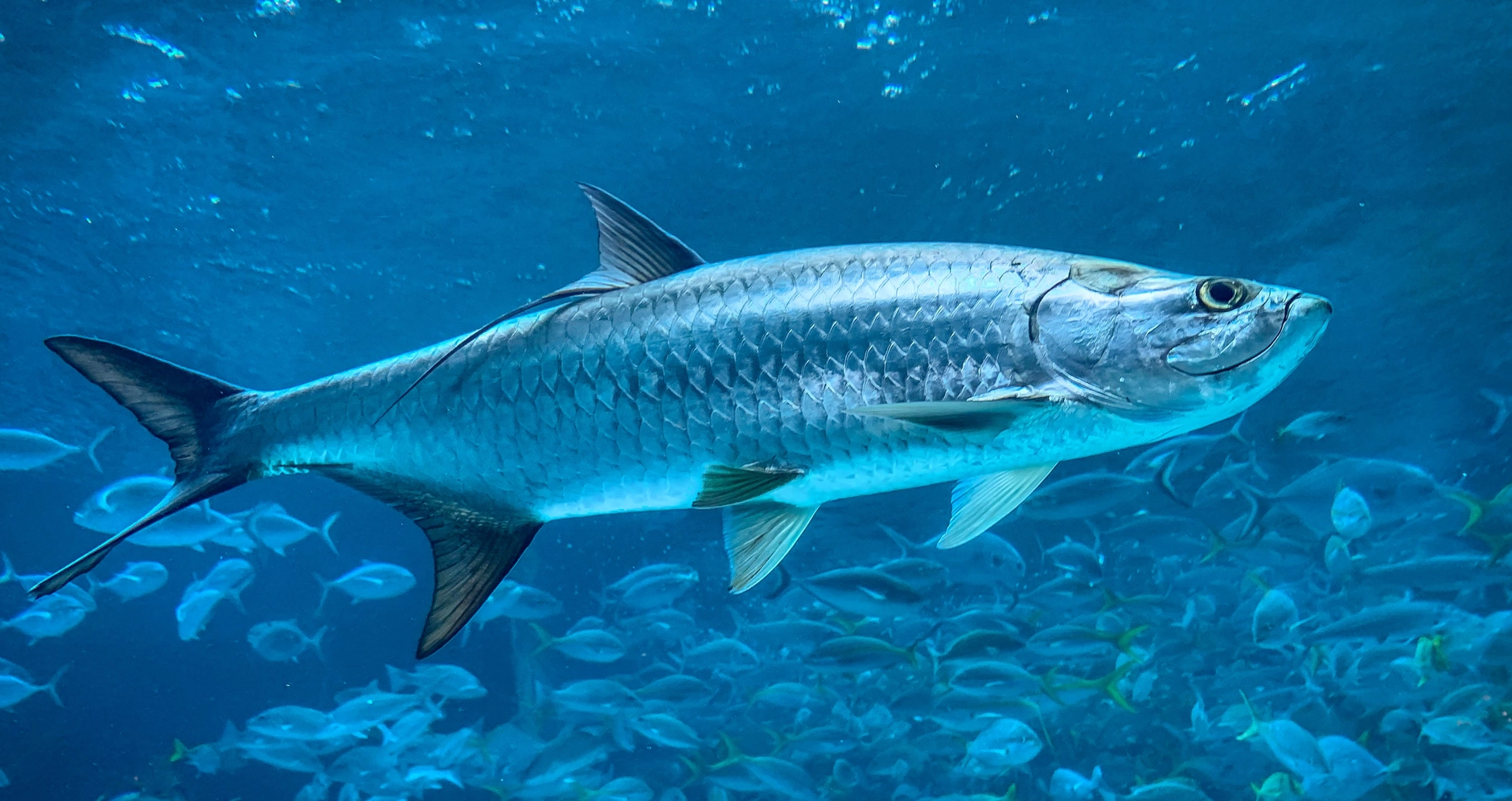
Live bait has always been one of the most dependable ways to tempt a tarpon, especially along the beaches of Longboat Key, inside Sarasota Bay, or around the deeper passes near Placida and Boca Grande. But the secret isn’t just having the “right” bait—it’s how that bait moves through the water. Tarpon are smart, powerful, and very aware of their surroundings. A natural, effortless presentation is far more important than the specific bait you choose.
Even the best bait won’t get a bite if it’s drifting unnaturally, sinking too quickly, pulled against the current, or placed above or below the depth the tarpon are actually traveling.
While many baits will work, a few perform exceptionally well in the waters around Sarasota, Longboat Key, Port Charlotte, and Placida:
Threadfins and sardines are great “all around” tarpon baits, but when crabs start flushing out of the passes during strong outgoing tides, nothing draws a quicker strike—especially near Gasparilla and Boca Grande.
Tarpon are highly depth-sensitive. They feed within narrow zones, and a bait that isn’t sitting at the right depth may get ignored no matter how perfect it looks.
If your sonar shows fish at 12 feet and your bait is drifting at 3—or dragging bottom—you are effectively fishing in the dark.
Use the proper rig based on how deep the tarpon are traveling:
A good rule of thumb:
Use the least amount of weight possible.
You want your bait drifting naturally with the current—not dragging or spinning. Tarpon can sense tension, resistance, and unnatural movement from far away.
How you deliver the bait is just as important as the bait itself. Tarpon are easily spooked, especially in clear Gulf water or heavily trafficked areas like Boca Grande Pass.
Use a quiet, controlled approach:
Tarpon almost always eat a bait that reaches them naturally under its own power. But if the bait appears dragged, pulled sideways, or fighting against the current, tarpon will immediately shy away.
When your drift, depth, and approach all come together, you’ll see the difference. Bites become cleaner, hooksets become easier, and you’ll connect with far more fish.
Live bait may be the go-to choice for most tarpon anglers, but artificial lures absolutely have their time to shine—especially along the beaches of Longboat Key, inside Sarasota Bay, and around deeper passes like Gasparilla, Boca Grande, and Big Pass. When tarpon get fired up, push bait to the surface, or travel in big, visible strings, artificials can sometimes outperform live bait simply because they allow you to cover more ground and stay mobile.
Artificial lures are also incredibly useful when boat pressure gets heavy. In spots like Boca Grande Pass or the beaches during peak migration, tarpon quickly become wary of free-lined baits drifting unnaturally among heavy boat wakes and engine noise. A well-placed swimbait or twitch bait drifting naturally through the school can sometimes trigger a strike when live bait gets ignored.
They’re also ideal for exploratory fishing—when you’re trying to locate moving schools, check new edges, or search for activity along beach troughs or deep cuts inside Charlotte Harbor.
These lure categories consistently produce tarpon in Southwest Florida’s fall and spring migrations:
Soft plastics and twitch baits give the most versatility—they allow you to work any section of the water column simply by adjusting retrieve speed, weight, or rod angle.
Tarpon are powerful but surprisingly deliberate predators. They rarely chase down a lure moving wildly or erratically. Instead, their feeding behavior centers on rhythm, speed, and natural movement.
To trigger more strikes:
Most tarpon strikes happen when your lure maintains a believable pace—not when you force action. In clear water, they can see your bait from far away, and they’ll commit only if it looks effortless and real.
Consistency is everything. A lure that stays in the zone, moving naturally, will get noticed and eaten long before something flashy and erratic.
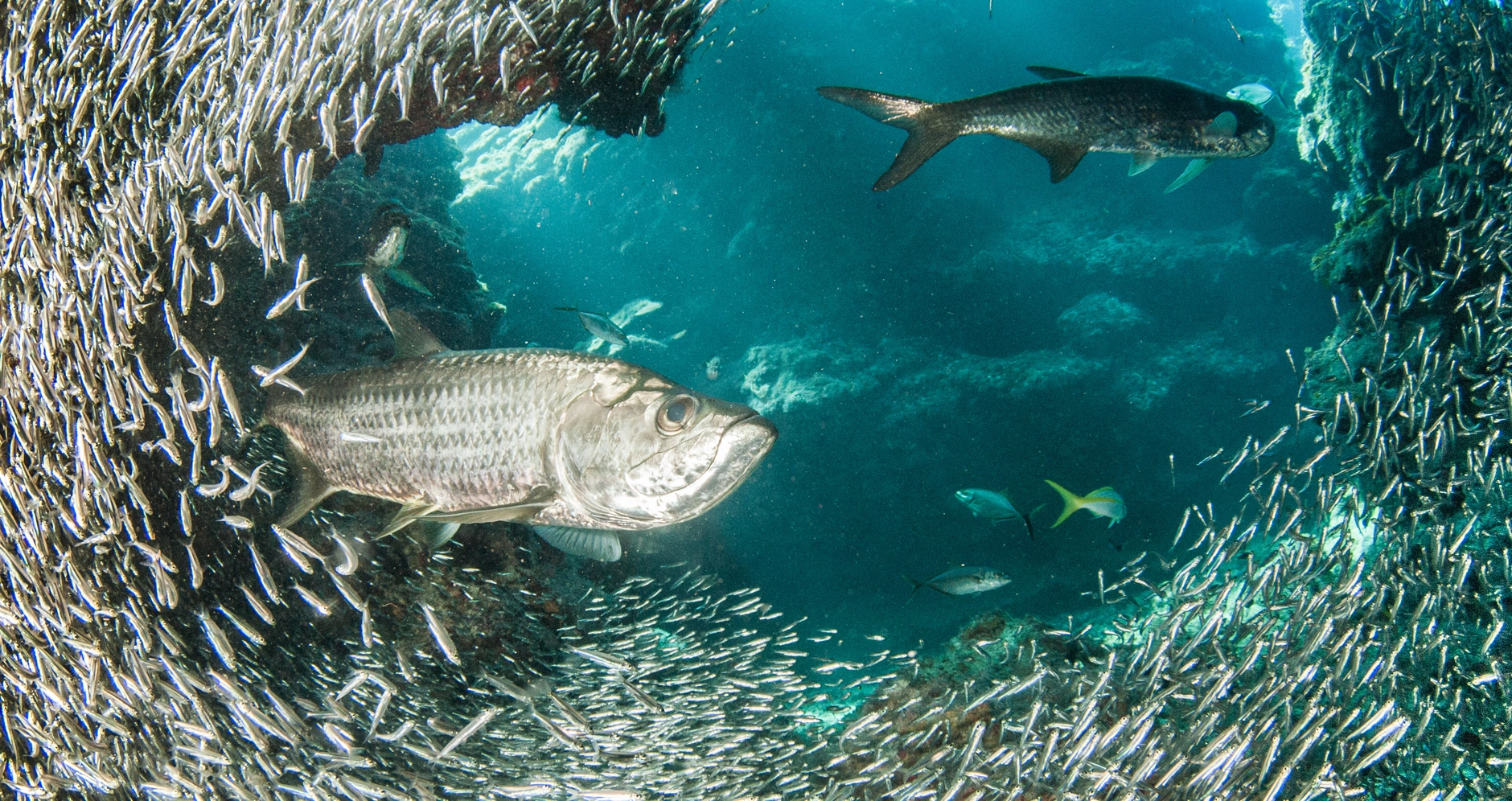
Tarpon are unlike anything else you’ll encounter in Southwest Florida’s waters. Once hooked, they launch into the air, rip line at high speed, and test every weak link in your setup. Using the right gear isn’t just about comfort — it’s the difference between landing a fish of a lifetime and watching it throw the hook on the first jump. With fish regularly topping 100–150 pounds in Boca Grande Pass, Gasparilla, Big Pass, and along the Longboat Key beaches, properly matched gear is non-negotiable.
You need equipment that can handle long battles, heavy drag pressure, and repeated shock loads. Light tackle will wear out both you and the fish, increasing exhaustion and reducing the chances of a successful release. Choosing the right rod, reel, line, and hook setup sets you up for safer fights and higher landing percentages.
A strong, balanced tarpon outfit should look like this:
Circle hooks are the gold standard for tarpon fishing because they set cleanly in the corner of the fish’s mouth. This helps prevent deep hooking, shortens the fight, and dramatically improves post-release survival — especially important in heavily pressured areas like Boca Grande and Big Pass.
If you expect to encounter larger migrating fish or plan to fish the strong currents of Boca Grande Pass, lean toward the heavier end of the spectrum. For calmer beaches and early-season fish, medium-heavy gear can work just fine.
One of the most common mistakes anglers make is setting the drag too tight. Tarpon shake violently and jump multiple times during the fight. Too much pressure early on can:
A good rule of thumb is to set your drag lighter than you think you need — enough pressure to keep the hook engaged but not so much that you pull against the fish during jumps. As the fight progresses and the fish settles deeper, you can gradually increase pressure.
Remember: early patience leads to better hookups and quicker landings.
Boat handling can make or break a tarpon fight, especially around popular local passes and beach channels. Good communication between the captain and angler is crucial.
When a tarpon takes off:
Skilled boat positioning shortens battles, protects your gear, and gives the tarpon the best chance of a strong, healthy release. This is especially important in tight areas like the mouth of Charlotte Harbor or the shallower edges of Sarasota Bay, where mistakes can quickly cost you the fish.
Even with the right gear, perfect drifts, and solid presentations, tarpon fishing still leaves plenty of room for finesse. These extra tips help you stay focused, fish more efficiently, and dramatically increase your odds of success — especially in high-traffic areas like Boca Grande Pass, the beaches of Longboat Key, Gasparilla Pass, Big Pass, and the open stretches along Charlotte Harbor.
The moment a tarpon eats, your instinct is to yank the rod and brace for chaos — but that’s the quickest way to lose the fish. Tarpon almost always explode into the air immediately after feeling pressure. If the line stays too tight during that first jump, the hook can tear free.
To prevent that:
This small adjustment dramatically improves hookup retention. Dropping the rod tip at the right moment is one of the most important skills in tarpon fishing — and it becomes instinctive with practice.
Tarpon attract boats, and popular areas like Longboat Key’s beaches, Boca Grande Pass, and Big Pass can get busy fast. Instead of letting boat traffic frustrate you, use it to your advantage.
Here’s how to stay safe, ethical, and productive:
Crowds don’t automatically kill the bite — poor boat etiquette does. When everyone moves with the same rhythm, the fish stay relaxed and the action stays steady.
One of the biggest ways anglers accidentally shut down a school is by idling directly over them again and again. Tarpon may be powerful, but they’re extremely sensitive to noise, vibration, and pressure waves — especially in clear Gulf waters.
To avoid spooking fish:
When you stay off their heads, the fish stay higher, move more predictably, and feed more willingly.
Tarpon are moody fish. Some days they’re lit up — busting bait, rolling in strings, and feeding aggressively. Other days, they cruise quietly without showing interest in anything you throw at them.
Trying to force a bite when they’re in a travel-only mood only leads to frustration.
Instead:
Some of the best bites of the day happen in short windows, especially around tide changes and low-light periods. Knowing when to sit tight can be the secret to hooking the fish everyone else missed.
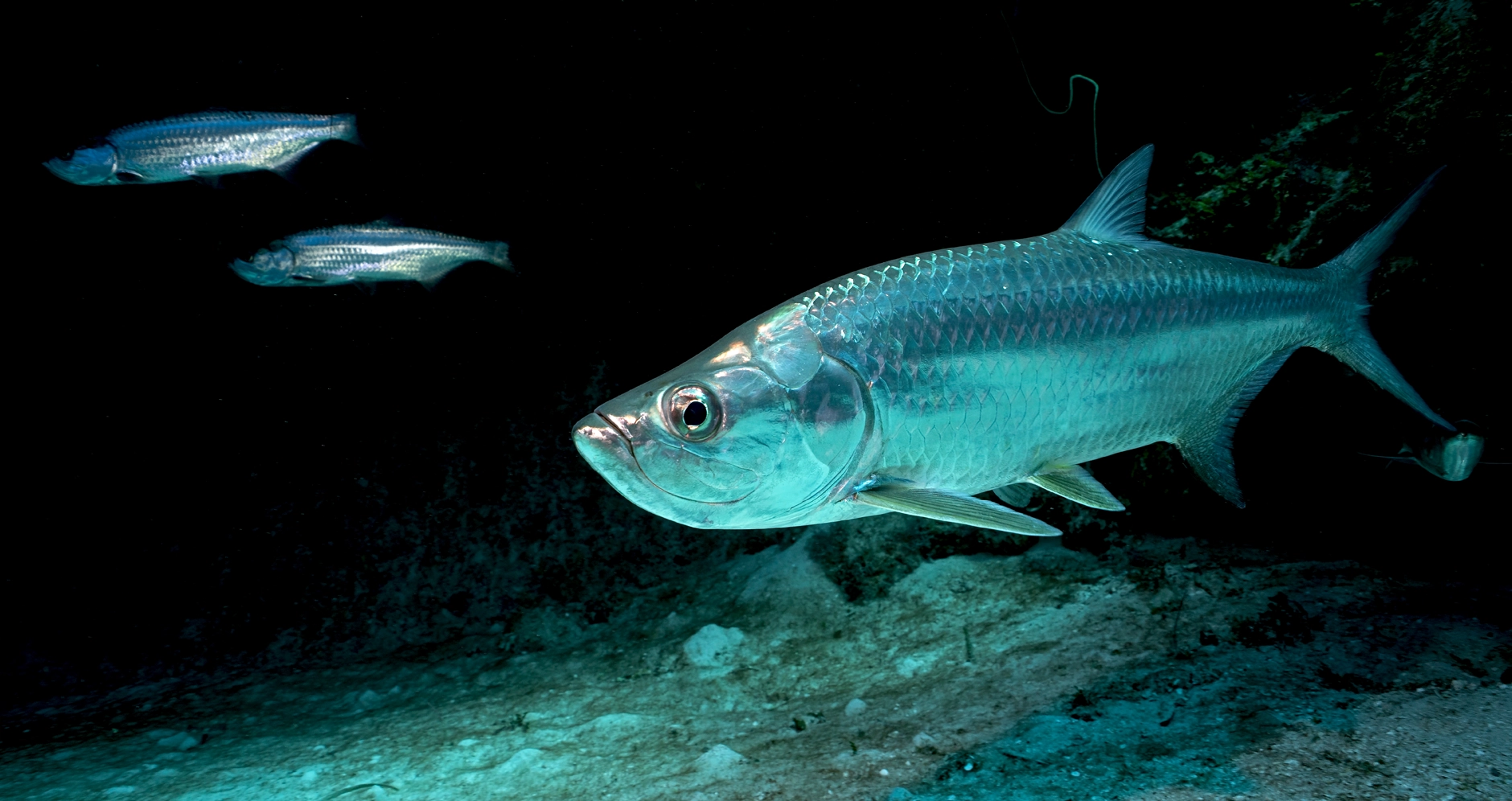
Tarpon can surprise you by eating at almost any moment, but veteran anglers across Sarasota Bay, Boca Grande, Charlotte Harbor, and the Longboat Key beaches know there are certain windows when the bite becomes far more predictable. Understanding how tides, weather, and water temperature work together helps you time your approach so you’re fishing when tarpon are actually feeding — not just traveling.
These fish follow consistent environmental cues, and when you learn to read them, you’ll immediately stack the odds in your favor.
Tarpon are strongly influenced by the tide cycle. Moving water carries bait, stirs up scent, and gives tarpon the oxygen-rich flow they love to travel and feed in.
Here’s how each tide plays into your success:
If you only have time to fish one tide, choose moving water every time.
Weather impacts both where tarpon travel and how willing they are to strike. In Sarasota Bay, Charlotte Harbor, and along the Gulf beaches, certain conditions consistently produce better fishing:
Weather doesn’t just change comfort — it changes how the fish behave and how you should present baits or lures.
Temperature is one of the strongest triggers for seasonal tarpon movement. Tarpon thrive in warm, stable conditions, and Southwest Florida waters give them exactly that during most of spring, summer, and early fall.
In areas like Charlotte Harbor and Sarasota Bay — where depth changes quickly — even a small temperature shift can reposition entire schools.
Tarpon are one of Florida’s most iconic gamefish — powerful, athletic, and capable of long, demanding battles. As exciting as the fight can be, it’s just as important to treat these fish with care, especially in high-pressure areas like Boca Grande Pass, Charlotte Harbor, Longboat Key beaches, and the bridges around Sarasota. A thoughtful release ensures that these giants stay healthy, reproduce successfully, and continue thrilling anglers for generations.
Whether you’re fighting a 60-pound youngster in Placida or a 150-pound migratory fish off Longboat Key, responsible handling makes a lasting difference.
Tarpon fights can be unpredictable — one moment they’re charging deep, the next they’re rocketing ten feet out of the water. Staying calm and maintaining proper rod pressure helps protect both the angler and the fish.
A smooth, controlled fight shortens the battle and keeps the fish healthier during the release.
This is the most delicate part of the entire encounter. Once you’re close enough to grab the leader, the goal shifts from fighting to protecting the fish.
Proper leadering is safer for both angler and fish — especially in tight passes like Gasparilla and Boca Grande, where strong currents can complicate handling.
A tarpon’s energy reserves aren’t unlimited. Even a short battle can leave them fatigued, so the release phase is critical to survival.
A strong, healthy swim-off is the best reward after a successful fight.
Tarpon fisheries in Sarasota Bay, Charlotte Harbor, and Boca Grande are world-class and heavily pressured. Many anglers target the same schools day after day during peak season, so every careful release contributes to a healthier fishery.
Good stewardship helps:
By fighting fish responsibly and releasing them with care, you’re helping preserve one of Florida’s most incredible natural treasures.

From Sarasota Bay and Longboat Key to Port Charlotte and Placida, our coastline offers some of the best tarpon fishing in the world. With the right preparation, an understanding of seasonal movements, and a thoughtful approach to presentation and handling, you can experience the heart-pounding thrill of connecting with the Silver King.
Whether you're sight-fishing along the beaches or drifting baits through deep passes, each tarpon encounter is unforgettable. Stay patient, stay prepared, and enjoy every moment on the water.
