
Florida boaters don't need a calendar reminder to know when storm season arrives. Summer brings afternoon thunderstorms, tropical weather can develop quickly, and the Atlantic hurricane season officially runs from June 1 through November 30. While hurricane activity peaks later in the season, serious weather can affect Florida boaters well before a named storm appears on the forecast.
The mistake many boat owners make is treating storm preparation as something that begins when a storm gets a name. The best approach is to prepare before the forecast becomes urgent.
A storm-season plan doesn't have to be complicated. It means knowing where your boat will go, understanding how your marina or storage facility handles severe weather, keeping critical equipment maintained, documenting the boat and its contents, and knowing what steps you'll take if a storm threatens.
Ingman Marine has covered what to do if you're caught on the water during a storm and how to protect a boat when a hurricane approaches. This guide takes a different approach: how to make your boat storm-ready before you ever need the plan.
Florida's storm season isn't just about hurricanes. Thunderstorms can bring sudden changes in wind, lightning, heavy rain, and rough water, while tropical systems can create much larger and longer-lasting threats.
Hurricanes add another layer of risk because they can bring high winds, storm surge, heavy rainfall, flooding, and dangerous waves. The National Hurricane Center identifies storm surge and large waves as major coastal threats, making a boat's location an important part of any hurricane plan.
The same storm can affect two boats very differently.
A boat stored on a trailer has different concerns than one sitting in a marina slip. A vessel on a lift faces different risks from one kept in a dry-storage facility. A boat in a low-lying coastal location may face storm surge or flooding that wouldn't affect a vessel further inland.
That's why storm preparation starts with a simple question:
Where will your boat be when the weather gets serious?
The answer should be part of your plan long before the forecast becomes a threat.
The best time to discover that your marina requires a specific hurricane procedure is not the day a storm is approaching.
The same is true for discovering that your trailer needs new tires, your bilge pump isn't working, or your insurance policy doesn't provide the coverage you assumed it did.
A little preparation during calm weather can make the response much easier when conditions change.
Start with your primary storm-storage plan and, if possible, a backup option.
Depending on your boat and circumstances, that could mean moving it inland, hauling it out, storing it in a secure facility, placing it on a trailer, or following a marina's established severe-weather procedure.
Ingman Marine's previous hurricane guidance recommends developing this plan before hurricane season rather than waiting until the last minute.
If your plan involves moving the boat, think through the logistics now. Where will it go? Who will move it? Is the trailer ready? What equipment needs to be removed first? How much time will the move require?
Those questions become considerably harder to answer when everyone in the area is trying to do the same thing.
If your boat remains at a marina, learn its storm policy before storm season gets busy.
Some facilities may require boats to be removed by a certain deadline. Others may have specific requirements for dock lines, canvas, electronics, or other equipment. A marina may also close access once conditions deteriorate.
Ask the questions now:
The goal isn't to predict the storm…it's to eliminate uncertainty about your response.
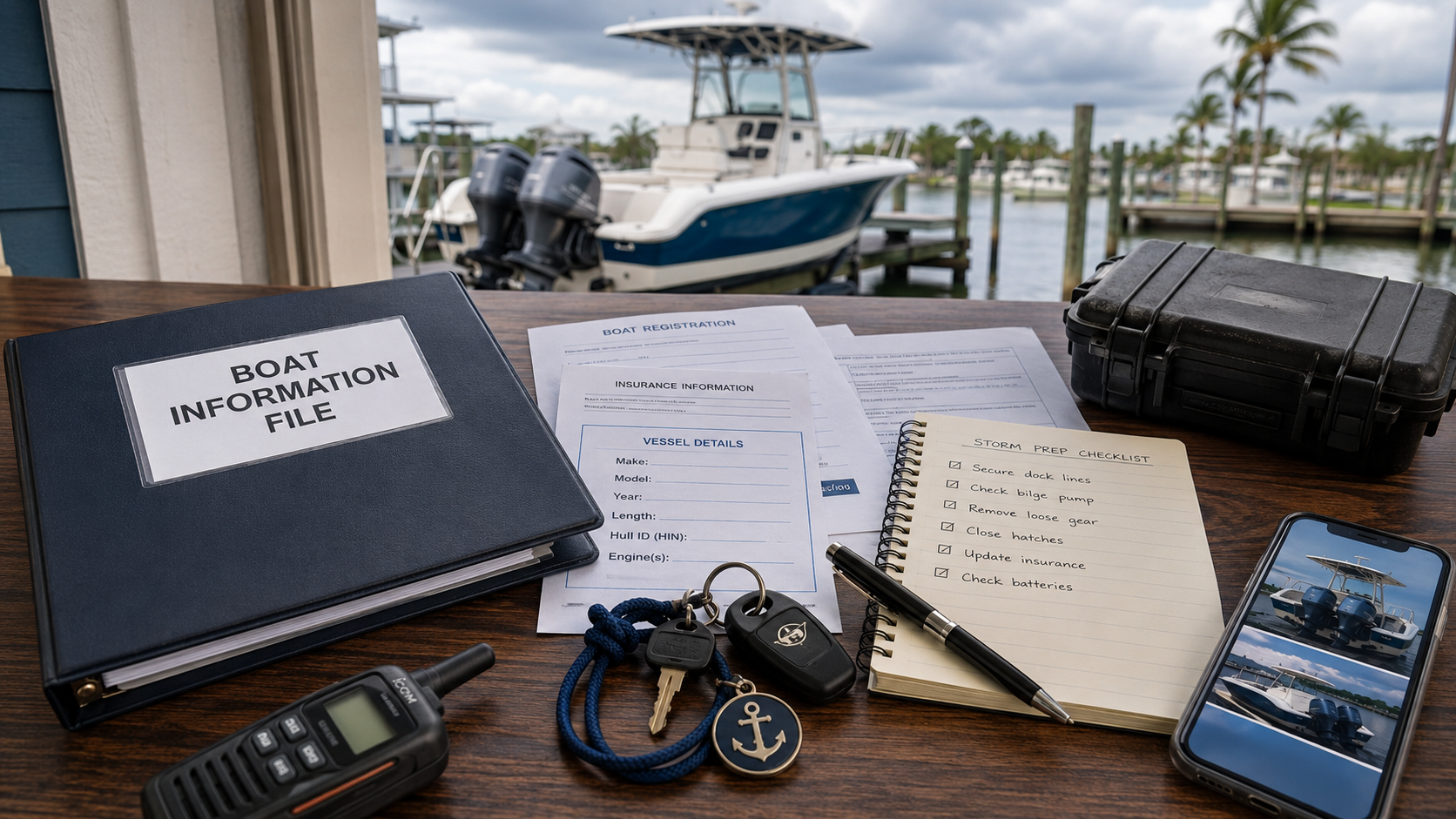
A storm-season file can make both preparation and recovery easier.
Keep digital or printed copies of important information such as your Hull Identification Number, registration, insurance information, engine details, trailer information, and contact information for your marina or storage facility.
It's also worth keeping current photos of the boat and major equipment. If you ever need to document damage, having a record of the boat's condition before the storm can be extremely valuable.
Ingman Marine recommends photographing and inventorying your boat and equipment as part of hurricane preparation.
Once a storm is approaching, preparation becomes a race against time. Before that happens, routine maintenance and organization can remove much of the pressure.
Anything loose on a boat can become a problem in high winds.
Cushions, canvas, fishing equipment, water toys, removable electronics, paddles, coolers, and other gear should have a designated storage plan. If an item isn't permanently attached, know whether it should be removed, secured, or stored elsewhere.
This isn't just about protecting your property.
Loose equipment can damage the boat itself or become dangerous debris during a severe storm. NOAA encourages boat owners to take steps to prevent vessels and boating equipment from becoming marine debris.
Storm preparation is also a good reason to inspect the systems that help keep water where it belongs: outside the boat.
Check hatches, ports, drains, through-hulls, bilge pumps, and bilge alarms for proper operation. Look for worn seals, damaged fittings, or anything else that deserves attention before severe weather arrives.
Ingman's existing hurricane guidance specifically recommends checking bilge systems and ensuring hatches, windows, ports, and through-hull areas are properly protected.
If something doesn't look right, address it before storm season becomes storm week.
For trailerable boats, the trailer is part of the storm plan.
Inspect tires, bearings, lights, straps, safety chains, hitch components, and other critical equipment before you need to relocate the boat. Make sure the tow vehicle is appropriate for the boat and trailer combination, and keep registration and required equipment current.
A storm is a terrible time to discover that your trailer isn't ready for a long trip inland.
Boat insurance isn't something to think about only after damage occurs.
Before storm season, review your policy and make sure you understand the coverage that applies to your boat, equipment, storage arrangements, hurricane-related damage, and other circumstances specific to your policy.
Insurance policies differ, and coverage can include conditions or requirements that aren't obvious until you need them. If you're unsure what your policy covers, contact your insurance professional directly.
Ingman Marine has previously emphasized reviewing insurance before hurricane season because waiting until a storm is approaching may leave little time to address coverage questions.
Your boat information file becomes particularly valuable here.
Take current photos of the hull, engines, electronics, trailer, and significant accessories. Keep receipts and documentation for major equipment when available, and update your inventory when you make substantial changes.
If a storm does cause damage, follow your insurer's instructions regarding documentation, claims, and repairs.
The goal of a storm-season plan isn't to make you fearless when a storm appears…it's to make you decisive.
Once a tropical system or other severe weather threatens your area, start monitoring official information and follow the plan you've already established.
Don't rely on social media posts, screenshots, or a single forecast from days earlier.
The National Hurricane Center provides tropical cyclone forecasts, advisories, marine forecasts, watches and warnings, and other official resources for mariners. Its marine-safety guidance emphasizes continual monitoring and reassessment as conditions and forecasts change.
Forecasts can change. Your plan may need to change with them.
If your marina has a storm procedure, follow it.
If your plan requires moving the boat, don't wait until conditions are already deteriorating. NHC marine guidance emphasizes the importance of early decisions because increasing wind and sea conditions can make later movement more difficult and dangerous.
And remember: your boat is replaceable. You are not.
If conditions become unsafe, don't put yourself or someone else in danger trying to save the vessel.
There is a point when boat preparation needs to stop.
Once severe weather makes travel or remaining aboard unsafe, personal safety takes priority over the boat. The best storm plan is one that protects the people involved as well as the property.
Ingman Marine's existing storm-safety guidance covers what to do if you're caught on the water, including the importance of getting to safe shelter when possible and using appropriate safety equipment.
This article isn't a replacement for that guidance. It's designed to help you avoid needing it in the first place.
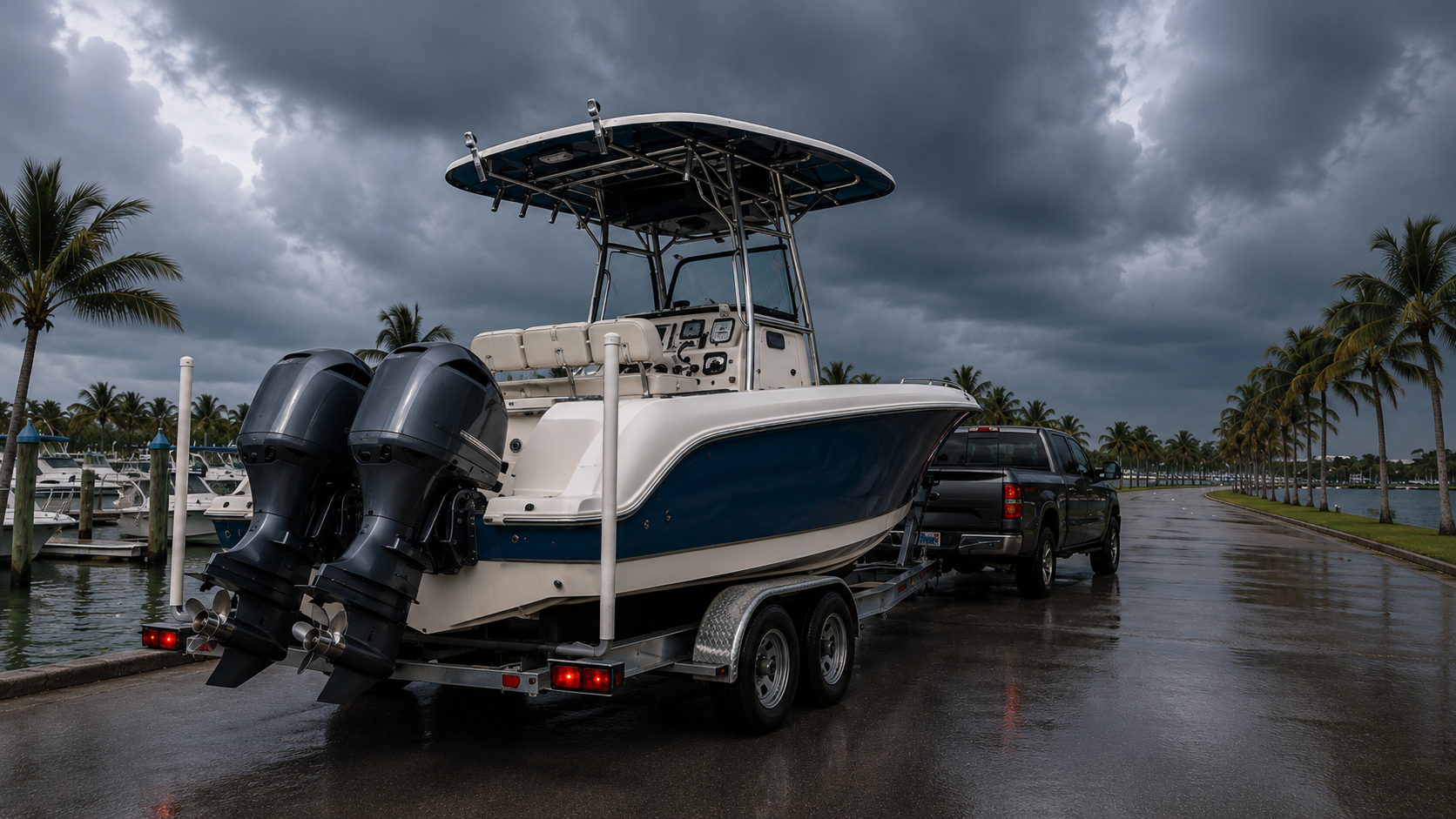
A storm passing doesn't automatically mean the water—or your boat—is ready.
Wait until local authorities, marina operators, and official weather information indicate that it is safe to return.
When you can safely access the boat, look for obvious damage before launching or operating it.
Check the hull, deck, hardware, electrical systems, bilge areas, engines, fuel systems, and other critical equipment for damage, flooding, debris, or signs of water intrusion.
If the boat has significant damage, don't assume everything is safe simply because the engine starts. A qualified marine professional can help determine whether systems or structural components require further inspection.
If you find damage, photograph and document it carefully and contact your insurance provider for instructions before beginning major repairs or cleanup.
Your pre-storm photos and inventory can provide a useful comparison to the boat's condition afterward.
And if the boat has taken on substantial water, suffered hull damage, or experienced electrical or mechanical problems, have the appropriate professionals evaluate it before returning to the water.
Storm preparation doesn't need to live in your head. Put the important pieces somewhere you can find them quickly.
Storm preparation shouldn't be something you think about once a year and then forget.
Routine maintenance, working bilge systems, healthy batteries, reliable trailer equipment, current documentation, and a clear storage plan all make boat ownership easier—even when there isn't a storm anywhere on the forecast.
That is also where having a marine service team you trust can make a difference. Ingman Marine's parts and services teams can help boat owners address routine maintenance, repairs, electronics and accessory needs, repowering, and other work that keeps a boat ready for the next trip.
Because storm readiness isn't really about predicting what Florida's weather will do.
It's about knowing what you'll do when it changes.
Florida's storm season is part of boating in the Sunshine State. You can't control the forecast, the storm track, or the weather waiting outside the inlet.
You can control how prepared you are.
Build your plan before you need it. Know where your boat will go, understand your marina's requirements, keep critical systems maintained, review your insurance, document your boat, and monitor official weather information when conditions begin to change.
Then, if a storm does threaten, you're not starting from scratch.
You're simply putting a plan into action—and that's a much better place to be when the forecast gets serious.
For help keeping your boat maintained and ready for whatever the Florida boating season brings, contact the team at Ingman Marine.
